
 The Level 400 Nursing and Midwifery students of Christian Service University (CSU) held their annual research seminar on Wednesday, April 16, 2026, themed, “Under the Digital Influence: AI and Social Media in Nursing and Midwifery Practice.” The event drew keen interest from students and faculty alike, as discussions centred on the growing impact of digital technologies on healthcare delivery and professional training.
The seminar provided an academic forum for examining how artificial intelligence and social media are reshaping learning, clinical reasoning, and ethical practice in nursing and midwifery. Students were also challenged to critically assess the emerging technological tools transforming modern healthcare.
In a welcome address, the Head of the Department of Nursing and Midwifery, Mrs. Ernestina Armah, commended the Level 400 students for the initiative and described the theme as timely in an era where digital technologies continue to redefine healthcare practice. She encouraged participants to engage actively and to apply critical thinking in their use of emerging tools.

Delivering the keynote address, Mr. Victus Elikplim Lumorvie, Computer Science Lecturer at CSU, urged students to guard against excessive reliance on artificial intelligence in both academic and clinical work. He explained that while AI systems can support learning and data analysis, they lack the empathy, ethical judgement, and professional accountability that patient care demands.
“AI can assist, but it cannot replace your clinical reasoning. If you rely on AI without questioning it, you risk outsourcing your thinking. In healthcare, that is dangerous,” he cautioned. He further noted that social media platforms, while useful for quick information, frequently contain misleading or unverified health content that could negatively influence clinical decisions.
Mr. Lumorvie also introduced students to relevant digital tools in healthcare, including Clinical Decision Support Systems, IBM Watson Health, Medscape, Ada Health, and ChatGPT, emphasising the importance of verifying information against credible academic and clinical sources.
Students complemented the discussions with theatrical performances depicting real-world scenarios of AI and social media use in healthcare settings. Adding a peer voice, Ephraim Osei Gyasi and Florence Dzifa Bedzra presented findings on students’ engagement with digital tools in training and clinical work, highlighting opportunities and risks associated with these platforms.
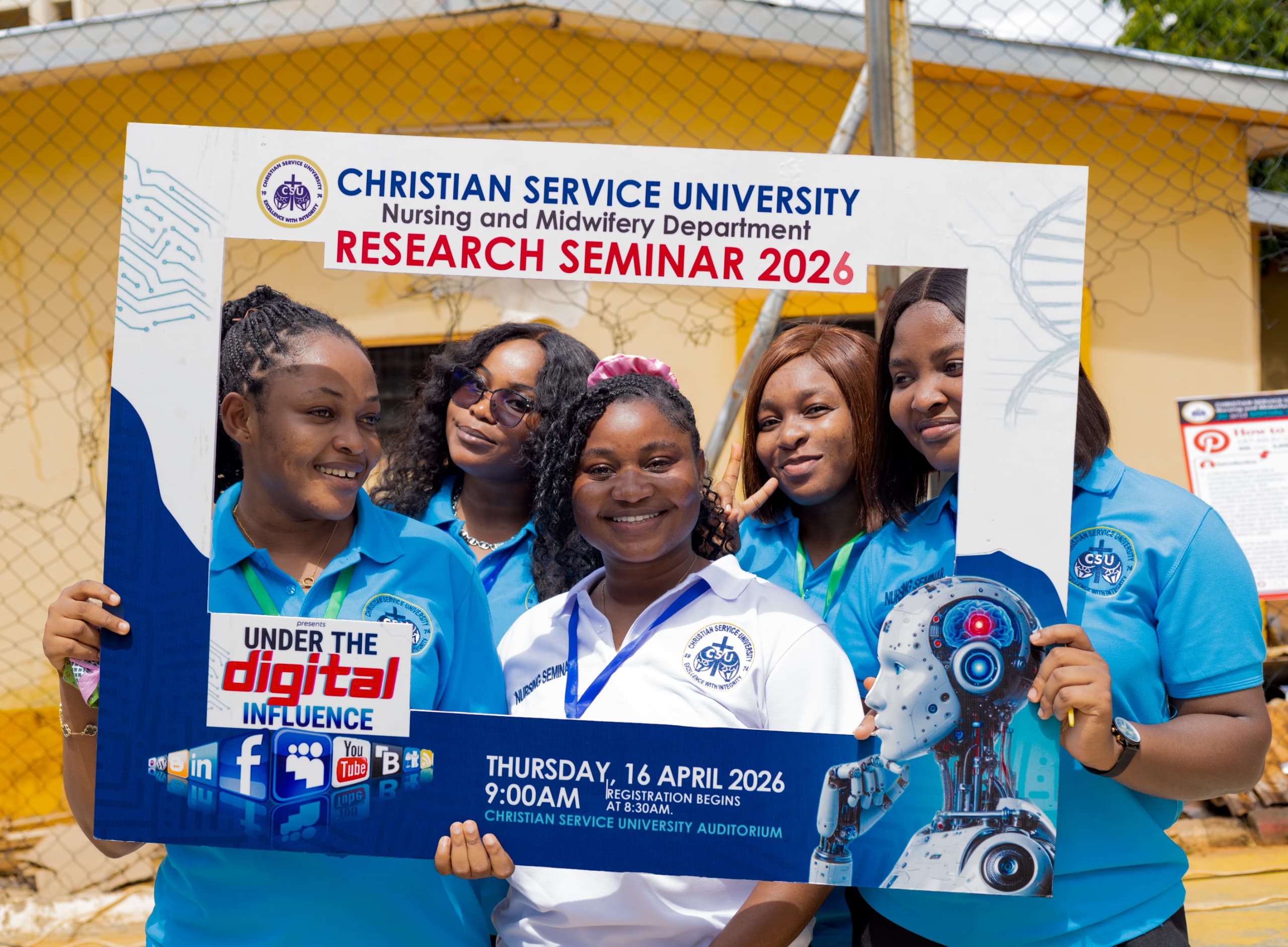 The seminar further featured outdoor interactive poster presentations, where students showcased research on the role of digital technologies in nursing and midwifery practice. The sessions fostered peer learning, innovation, and thoughtful reflection on the responsible application of technology in professional healthcare settings.
Participants were ultimately encouraged to adopt a balanced and discerning approach to technology. The goal was to ensure that digital tools enhance learning and practice while safeguarding sound clinical judgement, professional ethics, and quality patient care.